Monday, July 18, 2011

New York City 1839

John Martin was an observant traveler, and found much to interest him that others might have passed by without seeing. As the Great Western docked on the East River, he could see a section of grand stone buildings. These newly constructed buildings marked the area of the city which had been destroyed by a dreadful fire that took place in 1835. It began in a single building at the corner of Pearl and Exchange Streets on a bitterly cold December night. The temperature stood at 17 degrees below zero. The usual water sources, wells and reservoirs, and the East River, were frozen and useless. The fire roared unchecked through the lower part of Manhattan.

The Great Fire of the City of New York Dec 16 1835

In the four years since the fire, the area had been rebuilt with more fire resistant buildings. In addition, a great new water source, the Croton Water System, had been planned and construction was already underway. It would bring water from upstate New York by way of a great aqueduct. The cities of Ireland were always in similar danger from fire. So John was certainly interested in this grand solution to a universal problem.

There were several comfortable hotels for John to choose from, most sprinkled along Broadway. From that central location, John could easily walk about most of the city. New York was laid out in a grid pattern that made exploration easy. As soon as John had established himself in his hotel, he was out to explore, and observe.

1839 Bradford Map of New York City, New York - Geographicus - NewYorkCity-bradford-1839

Broadway was bustling with pedestrians and vehicles of all sorts. Evidences of wealth were easily visible in the brightly colored and elegant clothes of pedestrians, and ornate coaches often driven by black men in uniforms designed to impress. But John saw other signs of the first great depression which had occurred two years before. President Andrew Jackson had refused to re-charter the Second Bank of the United States. This resulted in a sharp rise in inflation, which rapidly reduced the value of paper money. Government land sales stopped because of uncertainty about the value of money used to purchase the land. On May 10, 1837, all the banks of New York refused to deal in paper money at all, accepting deposits of gold and silver only. The economy collapsed just as the term of the new president Martin Van Buren began.

The economy had begun to recover as John took his first walk around the city. Still, the city was dirty, beggars held out their caps to passersby, the stench of garbage fouled the air once visitors left the glitz of Broadway. John certainly thought of how like his home town of Newry this proud city of the new world seemed

John was certainly had a special interest in the Irish newcomers to the city and how they were being received in their new homeland. Irish immigrants were easily visible, at least the ones who came without funds and had yet to find work. The old fashioned jackets, trousers and hats made them stand out on any street, just as if they had had a large identifying sign attached to their backs. John could easily see the scornful looks of New Yorkers and hear the taunts that were shouted after them. Irish women often found work as maids in the grand houses of the city. So a servant's uniform produced the same scorn as Irish hats.

Most of the Irish immigrants lived in an area of the city called Five Points, its name coming from the intersection of several streets in one place. John certainly walked down to visit the area. The wooden tenements were crammed beyond capacity with Irish immigrants. Sewerage ran freely along streets and alleys, contaminating water and breeding disease. The great cholera epidemic roared out of Five Points and across the city in 1831. John found the new lives of his fellow Irishmen saddening. The immigrants had sacrificed so much and found so little. Their dreams of a better life were quickly dashed. Now they would live out their lives far from the green fields and fresh air of their native land, never to see their families and friends again.

Five Points - George Catlin - 1827

Not surprisingly, there was much desperation in the Five Points and much crime. Clearly, a new prison in the area was a prime necessity. So a large prison was built the  year before John visited. It was designed to look like an Egyptian tomb, hence the name by which it was known. Irish suspects were taken from the streets and slums of Five Points in the black paddy wagons into the dark cells of the tombs. Just the sight of this grim and aptly named building must have depressed. Fortunately, John had no way of knowing that just 10 years later, he would enter a similar prison as a convicted felon himself.

A few of the immigrant Irish achieved great success. One of them was a cook named William Niblo. After some years in New York, he was able to open one of the first restaurants in the city, Niblo Garden, located at Broadway and Prince Street. The inside of the restaurant was decorated with shrubs, and trees. Birds sung from their cages. This business opened shortly before John arrived, and was already wildly successful. John certainly heard about this Irish success story and must have dined there at least once.

William Niblo’s Sans Souci, Br... Digital ID: 809939. New York Public Library

There was one story that occupied the attention of New Yorkers when John arrived. Just a few days earlier, a strange, dark ship had been spotted off the shores of New York. Reports of its presence came from crews of tugs and small ships passing in the same area. On the 26th of August, Thomas Gedney of the USS Washington located the ship Amistad off Long Island, seized it, and brought it to New Haven. The ship was controlled by 54 slaves.

A hearing was held before the slaves were brought ashore in an effort to keep them in custody for return to their owners in Havana. However, the hearing judge decided to hold them for trial and put them in jail on American soil. When John arrived in New York, newspapers were still putting the latest Amistad news on the front pages of their papers.. So great was the interest in the story that a play called "Long Low Black Schooner" had opened in the Bowery Theater a week earlier

The accounts of events were unique and riveting, arousing intense and opposing emotions, according to views on slavery. These slaves had been captured in Africa and sold in the spring of 1839, though transportation of slaves across the ocean had been made illegal. In Havana, they had been sold to work in the sugar cane fields. They were put on board the Armistad for the short trip from the slave market to the cane fields.

One of the slaves  Joseph Cinque, a man with training in working metals, was able to free himself and the other slaves. After a fierce battle during which the Captain and 2 slaves were killed, the slaves succeeded in capturing the ship.  They intended to sail the ship back to Africa. Lacking any familiarity with navigation, they spared Jose Ruiz and Pedro Montez who promised to steer them home to Africa.But the two men had no intention of doing that. They sailed the ship eastward by day and northward by night.  This deception brought them off the coast where the slaves could be recaptured.

La Amistad (ship)

Abolitionists hurried to help raise funds to ensure that the men who risked their lives to fight for their freedom would indeed be freed. The first hearings had not been held when John left New York to visit his sister Jane in Canada. However, by the time he returned to New York to leave for home, the slaves had been ordered freed and returned to their homes in Sierra Leone. They settled in Farmington CN while the case was appealed. In 1842, the Supreme Court concurred in the lower court decision. Cinque and his companions returned to Africa, free men again.

Sources. "Asthma" by Dr. Hyde Salter. "Journal of Philip Hone," by Philip Hone. "Recession of 1837," Wikipedia. "Five Points," by Wikipedia. "Fire of 1835," Wikipedia. "Gastropolis: Food and New York City," by Hannah Lawson. "Journal of a Tour of New York In the Year 1830" by John Fowler. "American Notes," by Charles Dickens. "Retrospect of Western Travel," by Harriet Martineau.

Monday, June 27, 2011

Visiting the US and Canada 1839 - 1840

Author's note. Travel at this period was long, difficult and sometimes even dangerous. Still, John Martin decided to take an extended trip to the United States and Canada. This post will follow John, as he traveled by various means for almost a year. This will be followed by companion posts describing in greater detail what he experienced in New York City, and Washington DC.
By the summer of 1839, John Martin, had settled into the life and responsibilities of an Irish landlord. He was, by then, 27 years old, with time and money to travel. He had already spent a number of weeks in London, But he felt it was time to take a longer trip, this time to the US and Canada. The main reason behind this choice was to visit to his older sister Jane who had emigrated to Canada in 1833 with her husband Donald Fraser and their children. But he had a great interest in seeing new places, and learning new things as well.

So, in August of that year, John took the steamer across the Irish Sea to England and on to Bristol. There he had booked passage on a strange new kind of hybrid ship, part sailing ship, part paddle-wheeled steamer, the Great Western. This ship was the finest and fastest ship then crossing the ocean, getting from Bristol to New York City in just 16 days.

The ocean was very rough for much of the trip, "boistrous" as John described it.  John was listed in the ship's manifest as a merchant as were a substantial number of the other 100 passengers. Some were families with children and servants. The 24 staterooms for passengers surrounded a luxurious main salon. The sleeping spaces were not to John's liking. He needed fresh air. And there he was, shut into an airless space, surrounded by seasick companions. John was a fine sailor, never enduring a moment of seasickness. Fortunately, the wretched conditions caused no problem with asthma.


Great Western on Maiden Voyage (public domain image)

Gulls provided the first warning that land was not far beyond the horizon. Other ships that clung to the coastline began to appear. John was on deck to watch the islands of the narrows grow distinct before his eyes. Beyond this constricted passageway, New York Harbor and the great city opened up before him. The Great Western always seemed to attract attention, so there was a convoy of other ships as the Western moved into the harbor and up the East River where it docked. The trip across the Atlantic had taken just 16 days,

John had a grand plan for his trip. First he spent a week in New York City,  before embarking on a steamer which transported him up the Hudson River past the great palisades, and West Point to Albany. From there he switched to train travel. Trains in those days were segregated by gender, the cars rather resembling shabby buses of today. He crossed Lake Ontario on a steamer headed to Hamilton Canada.

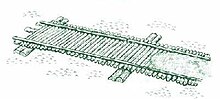
The trip from Hamilton to London Ontario was the worst of his trip. He traveled by carriage, one without springs, across about 80 miles of corduroy roads to reach London. John described the trip as "ordinary rack practice in the dungeons of the Inquisition." His agony finally ended at the log cabin where his sister lived in the woods of Upper Canada. Almost immediately, John suffered the worst asthma attack of his life. Fortunately, Jane well knew just what to do. When that had passed, John had no more asthma episodes on his entire trip.

Corduroy road ( Wikipedia)

Jane and her husband Donald lived in a small cabin on 200 acres of land in the Westminster section of London, land which they actually owned. This was small enough space for the Fraser's growing family. By the time John arrived, there were 4 children, and Jane was pregnant with her fifth child. But the family happily made room for their special visitor. The weather that fall was remarkably fine, "the temperature was deliciously mild, the air calm and dry; the sunlight, coming from a cloudless sky, was tempered by the peculiar dry haze of that season; there was neither rain, nor fog, nor damp of any kind. It was a luxury to me to breathe, the air felt so pure and light, and my lungs in such fine working order."

John even enjoyed his first real winter. The snow began in mid December, the storms followed by clear, sparkling frosty days. There was plenty enough time to discuss local revolutionary ideas. The value of land in London was being adversely affected when the English government set aside large tracts of land to support the local Anglican ministers. In early March, spring brought alternative periods of "thaw and frost." "At last, the spring suddenly appeared one lovely morning, with newly arrived singing-birds in her train."

When the ice on the Great Lakes broke, John left his family and the little cabin to continue his travels. He traveled across Ontario and Lake Erie to the St. Lawrence. He visited Montreal where the French residents had rebelled against the English government. Then he headed south to the United States, taking a steamer across Lake Champlain, and back again to New York, Philadelphia, and finally Washington DC. As John moved south and spring moved toward summer, he found the heat and humidity almost unbearable, hotter than any weather he had even experienced. He found it made him feel feverish, but he suffered no problems with his asthma.

From Washington, he crossed the Allegheny Mountains by train to Pittsburgh. There he could visit the Harshaw family, his mother's first cousins who had left Ballydoghtery and Warrenpoint a few years before. He viewed first hand American farms which his cousins, so impoverished in Ireland, now owned for themselves. His cousin Michael Harshaw lived in Pittsburgh where he was studying to be a Presbyterian Minister, something a poor boy without education could never do in Ireland.

He finished his circular trip by travelling from Pittsburgh to Cleveland, where he again traveled by lake steamers to Detroit and then back again to see his sister one more time. In the middle of the summer, he returned to New York City, and took the Great Western back to England. He had seen and learned much on this long trip, things that helped form the political ideas that governed much of the rest of his life.


View John Martin in America in a larger map

Sources: Dr. Hyde Salter, Asthma; Philip Hone's Diary; Dickens American Notes: P. A. Sillard, Life of John Martin.; Great Western background

Monday, June 6, 2011

Searching for John Martin

Please forgive any mistakes in the following post as it is translated by my Granddaughter in the sun room of our B&B in Northern Ireland and she finds my handwriting quite mysterious. 

Ireland is at its best when spring turns to summer, and for the first time, I am here to see the seasonal transformation. The fields are a youthful green still, rose buds will soon be fragrant blossoms, the fields which John Martin managed and loved are brightened by a warm sun and scented by gentle winds.

Actually, the secrets of John's life cannot be found in this tranquil place. They are to be found in the libraries of Irish cities. So I went first to the National Library in Dublin to search for information on miles of microfilm for John's public letters, and folders of private letters he wrote to friends, and out of print books written by contemporaries.

This time I found Dublin agog over other visitors: the Queen of England and the President of the United States. Security concerns made actual spotting of the visitors difficult, but I could tell they were nearby when helicopters hovered overhead or streets were closed to traffic. But research went on pretty much undisturbed.

I held no expectation for major discoveries, after all I had read most Irish newspapers published during John's years of political leadership and had finished the last folio of John's letters at the end of the last trip. 

However, on Friday May 20th, I learned I had set my expectations far too low. A new search program revealed references that I had not yet read. When I arrived at the manuscript library that morning, I found several documents ready for me to explore. The young woman at the desk asked me which one I wanted to work with first. 'It doesn't matter at all,' I replied.

So she handed me the thin green book that topped the pile and I carried it to my favorite desk by the window. This unfamiliar source was titled Letters of Thomas F Meahger. It contained letters from a number of Irish leaders including John Martin. According to a newspaper article from 1948 attached to the front of the book, the letters had been discovered in Australia and given to Eamon Devalara to return to Ireland. 

I settled in to read the letters John had written. He always wrote in clear but very small handwriting so there was much information per page. One of the first letters in the collection was one that John wrote from Paris on December 5th, 1854. It contained a stunning surprise about John's life that made clear how much he had sacrificed to serve his country. A routine research trip had suddenly become a very special adventure instead.

Saturday, May 14, 2011

Mystery Man of Irish History

John Martin and his role in Irish history has been almost completely forgotten. In many histories, he is missing entirely. In others, he is a single phrase or a footnote. As writers would have reported in his day, he has faded into oblivion. This is a strange fate for someone who was a national leader for many years and well known, respected and loved in many parts of the world.

Suzanne Ballard, a direct descendant of one of John's brothers, was the first sleuth in recent history to attempt to rediscover the truth of John Martin's life and contributions to his country. She was relentless in her search for any reference to his life and work. There was indeed a lot to find.  She found references to him in books written by many of the leaders of his day. But she also discovered that John had left a great body of material, letters to friends and newspapers, speeches, even a personal journal which Suzanne transcribed. The John Martin her research discovered was a thoughtful and wise man. Though he was never strong or well, he spent every ounce of his energy in selfless service to Ireland. His high standards appealed to friend and foe alike. And at one point in his life, he was the most important man in Ireland.

One of the people with whom John carried on a long correspondence was William O'Neill Daunt. He was the personal secretary of Daniel O'Connell. Like John, Daunt remained politically active for his entire life. This quote comes from a letter John wrote to Daunt on April 28, 1866. It was a time when political changes for Ireland were being discussed with the idea that they would make Ireland more democratic and Irish independence less necessary. One initiative was the creation of universal suffrage, the other the secret ballot.

John wanted his friend to be clear about his own ideas. He described himself as a "CONSERVATIVE." He then went on to describe how he defined the word. "my preoccupation as a politician would be that all the citizens be equal before the law and that the law be really the will and voice of the whole nation in all its classes. This might exist under a fine monarchy, and it might not exist under the fairest & freest seeming constitution that liberals can invent. It is REALITY that I care for, & not very much the form. Besides I hold that the rich, the strong, the cunning can and will always deal unjustly with the poor, the feeble, the simple, if both be left perfectly “free.” And therefore I would endeavour to protect these latter. And I would see that as much by legislation as by institutions which leave unshaken and which nourish and strengthen the policy’s of moral responsibility."  These ideas from 150 years ago can contribute in the political debates of today.
John Martin Letter


Tomorrow, I am leaving for Ireland on another search for more information on John Martin. For the next two weeks, I'll be hunched over a microfilm reader in the National Library in Dublin, reading newspapers published over 150 years ago. I had planned the trip and booked my tickets months ago. Only well after the fact did I discover that I would be in Dublin at a most interesting time. While I'm there, Queen Elizabeth will make an official visit, the first time a King or Queen of England has visited in almost 100 years. She will be joined also by Prime Minister of England David Cameron. The 10,000 troops which will be on hand for security will have just begun to rest up when another visitor arrives. Barack Obama will be making his first trip to Ireland a few days later. The Irish Parliament building is next door to the National Library, so I should have a good view of the visitations. If I can, I will be sending back posts of my discoveries about John Martin, and my adventures with the visiting dignitaries.

Then I'm traveling north to John's home territory for the opening of a special exhibit in the Newry and Mourne Museum called "A Great Change - the Lives and Times of James Harshaw, John Mitchel, and John Martin." James Harshaw was John's Uncle Harshaw. For the first time, visitors will be able to see the original journals both of these men kept. This exhibit will be open until the end of November, so many visitors will be able to take advantage of this very special opportunity.

Look for my next post from Ireland.

Wednesday, March 30, 2011

What To Do About the Poor?

In 1834, John Martin was living in Dublin, studying medicine at Trinity College. Dublin was a fine town then with wide streets, lined with shops selling luxury goods for the rich merchants and property owners who lived in fine houses around St. Stephen's Green. A different and darker Dublin existed down the dark alleys behind the grand houses. There the poor, the unemployed, the sick, the aged, lived in hovels, and basements unfit for human habitation. The wealthiest men of Dublin had little compassion for the misery of these people who were only visible when they crept out of their dark holes to beg.


A visitor from England, Henry Inglis, came to Ireland with his wife to see with his own eyes what Ireland was really like. The fact that he had his wife with him opened doors for him that might have been closed under the suspicion that he was a government spy. He was horrified by what he saw, and said so in a book he wrote on his return to England. In it he said "that the individuals whose charity prolongs for a little the existence of these miserable objects of their compassion, are not the individuals throughout the country whose improvidence, harshness, sordidness, and neglect, have contributed to swell the mass of pauperism, - nor those who possess the chief property in town, - nor those who are best able to help the indigent; and that, in those circumstances, it becomes an imperative and a sacred duty - alike urgent by the demands of humanity and the requirements of religion, to provide by legislative enactment, for the support, on equitable principles, of the aged, impotent, and infirm poor of Ireland."


John always considered that it was his responsibility as a landlord to care for the poor who lived on his property and in his neighborhood. Though his part of Ulster had a veneer of prosperity, neat cottages of weavers, bleach fields where the products of their work were stretched out to whiten, he knew that in the far corners, down overgrown lanes, there were people who were too sick or too old to care for themselves. The Martin family had always seen to it that they had food, and warmth. John continued to provide the same kind of help and in addition, he treated their sicknesses and provided medicine to ease their pain.


Sadly, Ireland had too many people without health or work, and too few John Martins. Parliament had first noticed the "poor problem" in Ireland in 1829. But nothing had resulted from the debate held then. On March 19, 1835. an Irish landlord, William Smith O'Brien, MP for Limerick, rose to present a resolution that Parliament should provide relief of the "aged, helpless, and infirm" Irish. To support his resolution, he quoted from Henry Inglis's eyewitness account of what he saw in Dublin. "I entered upward of 40 of the abodes of poverty; and to the latest hour of my existence, I can never forget the scenes of utter and hopeless wretchedness that presented themselves that day. Some of the abodes I visited were garrets - some were cellars. Some were hovels on the ground-floor situated in narrow yards or alleys. Let the worst be imagined, and it will not be beyond the truth. In at least three-fourths of the hovels which I entered, there was no furniture of any description, save an iron pot; no table, no chair, no bench, no bedstead - two, three, or four little bundles of straw, with one or two scanty and ragged mats, were rolled up in corners." In these terrible places, there was no sign of food at all.


Such distress should have produced uniform sympathy and support. But that wasn't the case. Some members of the House of Commons argued that the situation in Ireland was much improved, referring to the prosperity of County Down and County Antrim as evidence. Besides, a Poor Law would "destroy the sympathies of all human beings for one another, and the feelings of the poor toward each other." Daniel O'Connell was the natural leader of the Catholic part of the population. So he might well have been expected to support O'Brien's resolution. But he did not. One of the reasons he offered was that workers who were poor because there was no work would not be helped. Then he continued, "He feared that the effect of the introduction of poor-laws in to Ireland would be to make youth careless, and manhood reckless, if there were a certainly that old age would be provided for. It would ... be the cause of depriving poverty of its remunerating quality, of loosening the close ties of social life, and inducing callous hard-heartiness to the necessities of relation. At present, the poor of Ireland were remarkable for their attention to their aged and infirm parents."' He concluded that the report on Irish poverty which the government had approved should be presented before any kind of poor law should be created.


The MP for Cork, Poulett Scope, agreed with O'Connell's analysis. "it was as notorious as that the sun shone in the heavens, that distress and starvation overwhelmed the country. In times of famine, instances of actual starvation were not unusual. The reason why they were not more common was, that the poorest individual would and did share the very last thing he had with a fellow sufferer, rather than allow such a person to die from sheer want." The "let's wait for the report of the commission on Irish poverty" argument prevailed and Smith O'Brien withdrew his resolution. As John read the report of the actions in Parliament in the Newry Commercial Telegraph, he could not have dreamed that Smith O'Brien would become a friend.


Most of another year would pass before Parliament again debated help for the poor in Ireland. The report on Irish poverty had been presented by then. On February 9, 1836, Sir Richard Musgrave, MP for Waterford, summed up what the report had concluded. "No document that was ever laid upon their table showed a greater amount of suffering, misery and destitution."


Now the argument turned on what Parliament should do about it, not whether they would act at all." Smith O'Brien had ideas about how the help should be offered. Administration of aid should be as local as possible. Emigration of extra Irish should be promoted by Parliament, and paid for through public funds. Parliament should also fund land reclamation projects to employ more of the Irish who chose to stay. Only then should houses for the poor be built.


This debate was cut short with a government promise to bring in a bill of its own. The leadership might have intended for the promised kind of quick action to take place. But the death of King William intervened, and another year passed before the Whig Prime Minister, Sir John Russell presented the government's law for the Irish poor. There was little dispute about the necessity for such a law, and general agreement on what the form should take. Ireland would be divided in some fashion into Poor Law Districts, the purpose for which was to tax the landlords in the area to support the poorhouses that they intended to build for the elderly, sick and disabled. Half of the Poor Rate, as the tax was called, would be paid by the landlord. The other half would be paid by the tenants on his property. Poor laborers with holdings of less than 5 pounds in value would be excluded from the tax. There would be no funding for workers who wanted work but could not find it.


John, for one, opposed having the British government create this new tax on the land, one that would increase as the needs for poorhouse support increased. But another concept expressed during the endless hours of debate was that any local supervision of the law would be corrupted by favoritism. So the entire program of support for the poor would be run by the same men who administered the English Poor Law with the addition of one man from Ireland. This control was supposedly necessitated by local officials who tended to play favorites, a slander that certainly caused much angry conversation in Loughorne.


During the debates, there were things said that John agreed with. Sir John Russell explained that Ireland was caught in a vicious cycle. There was little capital in the country, so there was great unemployment. That led to violence and crime, which in turn led to insecurity. Little capital would flow into Ireland without the promise of security for investments. And so the downward cycle continued. One Irish MP made clear how strongly John and his friends and neighbors felt about a poor law. "A very strong sensation was excited by the present Bill, in the north of Ireland... Persons of different creeds and politics who scarcely agreed upon any other question, agreed that this measure would operate most injuriously." Without a provision to make absentee landlords share the burden, it would never be popular.


As the debate neared its predictable conclusion, one member denied that the deplorable state of Ireland was in any way affected by the Penal Laws directed against Catholics and Presbyterians, which had been enacted by previous parliaments. That was too much for Mr. Wyse. "Religious and political differences, ignorance, and physical destitution," were amongst the principal causes of Irish poverty. Penal laws had created the structure and practices of Irish society which created political division, ignorance and physical destitution. "Was it not notorious that a country in which there was a constant war going on between rich and poor - in which there was no intermediate or middle class to separate them - in which the rich feared and the poor hated - was one of the disorganized, the most perilous, and naturally the most destitute which could well be conceived? Was it possible that this should not be the case, when two races and two religions - distinct, if not opposed - were placed front to front - where the rich were of one race and faith and the poor of another - where every means were taken to keep up this opposition and hostility - was it possible... that in such a state such a war should be in constant and most injurious action?"


Nothing anyone said stopped the steady progression of the bill. On April 30, 1838, the House of Commons passed the Poor Law for Ireland. On July 9, the House of Lords followed suit and the bill became law for Ireland. John Martin would now face a large increase in his taxes in the best of times. In times when occupancy of the poorhouse was high, his taxes would be increased still more


Just two months after the passage of the Poor Law, implementation began. Newry was selected as the first place for the law to be activated. Two assistant commissioners were dispatched from Dublin to explain that the poorhouse they planned to build there would cost L8,000, money which would be loaned by the British government. The plan for Newry was that the poorhouse would be completed by the end of the following summer, a plan over a year too ambitious. The commissioners didn't return until the spring of 1839. By that time, the Poor Law Commissioners had divided the area into Poor Law districts. Each of these districts would elect one member to the Board of Guardians who along with some appointed members would supervise the poorhouse. Loughorne was placed in the Ouley Poor Law District. When the election was held there, John was elected Guardian. This was his first small step toward a life in politics.


Birr Workhouse

Sources: Birr Historical Society; Workhouses.org (search for Newry), Newry Journal series on workhouses and Poor Law; Newry Commercial Telegraph, April 6, 1839; Hansard Parliamentary Debate, March 19, 1835, Feb. 9, and March 3, 1836; May 1, 1837, Feb. 12, 16, 19, March 2, 16, April 30, and July 9, 1838; Ireland in 1834: A Journey Throughout Ireland, by Henry D. Inglis; Tour Round Ireland, Through Seacoast Counties, in the Autumn of 1835, by John Barrow Esq.

Sunday, March 27, 2011

When Church and State Were One

John Martin had little interest in political issues, his entire attention being focused on his responsibilities as a new landlord. Like many other Irishmen, he didn't pay much attention to the actions that the English Parliament in London were taking to govern Ireland. At least not until he felt a personal impact.

The first issue that Parliament took up in which John had a great interest was the endlessly contentious subject of Irish tithes. Centuries before, the British government had chosen one religion to be the official religion of Ireland, whose needs would be met by acts of the government. Not surprisingly, Parliament chose the official church of England to become the officially established church in Ireland, though members in the Church of Ireland represented a small portion of the Irish population. Out of a population of 8 million, less than a quarter of them attended this Established Church.

This situation created a distinct problem for clergymen of the Church of Ireland. There were simply too few of them to support the clergymen of the Church of Ireland in the style and comfort of their English counterparts. To remedy this problem, Parliament passed a law requiring members of the other churches in Ireland to pay a tithe of every fall harvest to the clergyman of the local Church of Ireland. This requirement fell on both Catholics and Presbyterians. Since John was a member of the local Presbyterian Church, he was a follower of a lesser religion, and forced to pay his share of tithes. He was lucky though. The loss of a tenth of the value of his crops didn't lead to starvation for him as it did for many poor farmers.

The injustice of having to support a church to which they didn't belong greatly angered both Catholics and Presbyterians. The justification for such unfairness was stated during one of the many Parliamentary debates on the subject by one member of the House of Lords. He explained that an official church had been chosen for the benefit of the people of Ireland, and should be regarded as a blessing, not a curse. John and the other farmers of Ireland had but to forsake their lesser religions and join the one true religion to avoid this impost.

Most Irish farmers had no intention of converting, and couldn't possibly afford this tithe obligation. So they simply didn't pay it, leaving the clergyman who was to benefit the distasteful job of calling on the local police to seize the tithes. Though Parliament had given them the right to take that action, the hostilities that followed placed them in physical danger. Clergymen begged Parliament to take action. One letter from a clergyman in Roscrea was typical of what members of Parliament and the government were hearing. "Our situation is pitiable in the extreme. We cannot sit down and starve; we cannot proceed but at the hazard of our own lives, or the lives of the people we employ."

So, in the session of Parliament which sat during the summer of 1836, Parliament attempted to fix the tithe problem once and for all. Their solution was quite simple on the face of it, but more complicated in the doing. Instead of having clergymen or their employees collecting the tithes, the landlords would from then on be the collecting agents. After all, since tenants were used to paying rent to landlords, this would just be one simple additional fee that would be due with the harvest rents. Then landlords, like John Martin, would have to deliver the payment to the local clergyman, tucking his own tithes into the payment. To make the payment less painful, the tithe payments would receive a discount.

Sharman Crawford, an Irish landlord and member of the Church of Ireland himself, had a better idea. On July 1, 1836, he made a motion in the House of Commons to abolish tithes altogether. "The principle he advocated was not whether the Catholics of Ireland should be relieved from a fractional portion of the tithe assessment but whether they should still continue to pay the odious impost which stamped them with the name of slaves in the land of their birth. But there was still a higher question - it was the religious (and consequently the civil) liberty of all Protestant as well as Catholic non-conformists in the British empire. It was the right of conscience against the tyranny of establishments - It was whether men should be accountable for his religious faith to his God or to his fellow-men. It was, whether the state was entitled to set up an idol of its own, and say you shall worship this idol and pay the priests who minister it."

Then he warned Parliament that "Presbyterians of the North were as determined against tithes as the Catholics of the South." This was certainly true in John's case. He generously supported his church, the Donaghmore Presbyterian Church and the poor of this neighborhood. Through the tithes he had to pay, he also supported St. Bartholomew's Church, the local Established Church and its poor parishioners. Not surprisingly, Mr. Crawford's motion lost by a vote of 61 to 18.

With that minor diversion attended to, the House of Commons debated their legislation through a hot London summer. The basic concept was widely approved, that landlords from that time on would be required to collect the tithes and to pay the local clergyman what was due him. But in order to mitigate the basic unfairness of tithe payments, Parliament had to concoct some way to assure Irish farmers that their tithes would in some way benefit them, thus making the payment more collectible. They came up with the idea of removing from the clergymen the personal use of all tithe receipts. Instead they would essentially put clergymen on salary, thus guaranteeing a surplus would exist that would be used to benefit all the people who paid it. The amount of money that clergymen would get would depend on the size of their congregations and the importance of the parish. How to translate that concept into pound amounts proved very contentious. After many hours of debate, the new tithe law passed the Commons on July 25, 1836 and moved on to the House of Lords. The Lords made changes that did not please a significant number of members of the Commons. On August 2nd, members voted to reject the Lords amendments and the bill died for the year.

The new tithe law may have died, but the anger and violence did not. Shortly after the failure of Parliament to produce a solution, more violence broke out during the harvest of 1836. This time, some of the violence occurred in Ulster. A tithe collector was attacked in the town of Foughill, southwest of Newry. James Morris, a Catholic by conversion, had been hired by the rector of the Established Church in the nearby town of Jonesborough to serve notices that tithe payments were due. He had already served 7 of them when a mob appeared outside his home on November 28, 1836. The farmers stormed into the house and dragged James outside. There they began beating him with shovels and stones while his wife tried frantically to save him.

As James struggled for his life, he cried out to his attackers, "Oh, God! Have mercy on me! Boys, dear, don't take my life!" But the beating continued, and his screams faded to silence. James Morris lay a lifeless heap in the dark. Sadly, he was just one of the many victims of the failure of Parliament to free the Irish from the control of the church they had placed in a position of power over them.

There was no time to make much progress on a new bill in 1837. In June of that year, King William died and was succeeded by his niece Victoria. The death of a monarch required dissolution of Parliament and a new election. This new Parliament didn't get to a new tithe law until the spring of 1838.

As the new battle began, the Prime Minister, Sir John Russell, explained that having a union of church and state was a benefit to both. The church benefited from having the government pay their ministers, from enjoying a major role in creating legislation that would benefit their interests, and from having the state enforce these benefits. The state benefited as well. They had a governmental arm "that gives a sanction to morality and enforces the precepts of religion and thus induces the great mass of the people to subdue those passions which it is the business of the civil magistrate to punish."

Sir John warned of the dangerous effects of separating church and state. The majority of the learned citizens and people of importance were members of the Established Church of Ireland. Without the active support of the state, they would be put in a position of inferiority and the country would be in actual breach of important provisions of the Act of Union. The British Empire would be at risk.

Lord Russell then pointed out the English dilemma, the necessity of reconciling the English wants with those of the Irish. An Irish leader, Mr. Fox, had made clear what the Irish wanted in previous debates. "The Roman Catholics must have wealth - they must have importance - they must gain professional honour - they must acquire from day to day, as Ireland makes progress in trade and agriculture, more and more importance, - they are 6 millions and a half - they are in influence and in intelligence daily increasing; and I tell you it is not safe to use these people with contumely and contempt, to foster in them feelings of alienation, and to think that you can maintain the empire of this country in the same state in which it has been in former days upheld ... You cannot longer keep the people of Ireland subject to your sway as if they were a low, a vile and an alien race ... You cannot say at once that they are ignorant, priest ridden, superstitious, and governed by a desire to subvert the Protestant constitutions and that you nevertheless have confidence in them. You must do one thing or the other."

When debate resumed on May 15, Daniel O'Connell, the widely accepted leader of the Irish Catholics, rose to address the bind into which playing religious favorites had gotten Parliament. Daniel was a large man who always wore a curly red wig. He was a great speaker, and though most people were opposed to anything he said, they flooded in from the cloakrooms to hear him. Daniel didn't like the new version of the law, as he saw it as a way to get more money for the Protestants to use to convert Catholics. He warmed up with a dose of sarcasm. "Oh! how I enjoyed that the struggle in which my country is engaged and in which you are combined against her, that you stand before the world the parties to such a contemptible and such an unjust resistance to her rights - that you, despite the scorns and defiance, of the sneers of mankind, should thus stand before civilised Europe."

One of the issues that England interspersed with the tithe debates was the freeing of the slaves in English controlled territory. The difference in concern for slaves and the impoverished Irish that O'Connell witnessed was the reason for his cynical comments. But Daniel O'Connell didn't stop there. "There is a herd of morbid humanity abroad; it is to be found amongst men who affect philanthropy - who are tenderly alive to all the evils which may be endured by those who are not of an agreeable colour and who are found in distant regions, they are men who overflow with the milk of human kindness for black men and women, but who can with patience, with equanimity and even with approbation, look on, and see all the injuries you inflict upon Irish men, and all the injustice you do in Ireland. I wish the Irish were negroes, and then we should have an advocate."

He then pointed out that the Church of England was the church of the majority of the English people. Naturally it was the chosen church to establish there. In Scotland, the Presbyterian church was the church of the majority, so it was the established church. "In Ireland, you have trampled on the religion of the people and you perpetrated your tyranny in the worst form, and in the most odious shape, until at length the people of Ireland spoke to you in a voice too loud not to be heard, and too unanimous to be misunderstood, and you found yourselves unable to continue them in their former state of degradation. .. The Church of the People should be the church of the State."

O'Connell continued his opposition at the next session on July 11. "So long as the fact existed that nine-tenths of the Irish population consisted of Roman Catholics and Presbyterians, it was idle to think of forming any scheme for reconciling them to pay for maintaining the religion of the other tenth."

Not surprisingly, nothing that O'Connell could say would change the majority opinion of the members of Parliament. On July 26, 1838, the new tithe law passed the House of Commons. It went quickly on to the House of Lords where this time, the law passed swiftly and in a way, the Commons could support.

With Queen Victoria's approval, the new tithe law became law for Ireland. Now John was required to collect tithes from his tenants. This was a law it was impossible for him to ignore. John would follow the law, no matter how much he didn't like it. He collected the discounted tithes, and along with his own, passed them on to the clergyman of St. Bartholomew's church. As England had hoped, this put an end to the tithe wars and danger to the local clergy. Catholics and Presbyterians would be obliged to support the Established Church for another 30 years.

A Receipt for Rent and Tithes From John Martin

Sources: Newry Commercial Telegraph, Nov. 30, 1836; Hansard Parliamentary Transcripts, April 25, June 1, July 1, July 25, Aug.2, 1836; Hansard May 14, May 15, July 10, July 26, Aug. 9, 1838. Image of receipt courtesy of Adrian Murdock

Tuesday, March 8, 2011

Irish Landlord

John Martin loved his new life, loved being an Irish landlord. He liked rising early in the morning to make the most of the short days in the winter, and the long days of summer. But by the time he left the house, there was usually a cluster of people at the door waiting for him, farm laborers waiting to be given the day's work, or a tenant's wife begging him to visit her sick child. Groups of children would hang on gates waiting for him to pass by, as he always had candy treats in his pocket to make them feel special.

The Fields of Loughorne


At the age of 23, he had become one of the most important people in the area. Soon, he would be able to share his happy life with his friend John Mitchel after Mitchel married a lovely young woman, Jane Verner, and settled down in nearby Banbridge to raise their growing family and to practice law. The two men would take long walks, and sit on the lawn at Loughorne Cottage to debate some issue of interest while Jenny Mitchel watched over Mitchel's children.


It was very strange that John would embrace an occupation so widely hated throughout much of Ireland. But there was a reason, deeply rooted in Irish history why this was so. There were two distinct and widely different relationships between landlords and tenants depending mainly on location and religion. Eastern Ulster where John lived had been settled in the 1600s when landlords and farm laborers arrived to occupy the land from which Catholics had been pushed west and south. Though of different classes, these men shared a "community of interests and a community of feeling." This relationship had evolved over the centuries into the Ulster Custom. This meant that rents couldn't be raised arbitrarily, and that tenants couldn't be ejected unless they failed to pay their rent. But the Ulster Custom also insured that tenants would receive at least some portion of the value of improvements they had made to their holdings if they were evicted or chose to leave. John's outlook on his job was like most of the landlords in his part of Ulster.

No such tradition existed in most of Ireland. Over the centuries of English control, most of the land in the rest of Ireland had been confiscated from Catholic owners, and acquired by prominent English land holders. The new English masters treated the Catholic tenants as slaves without value. They were determined to keep them in a permanent state of degradation of mind and body, at the same time squeezing from them their last few pennies with excessive rents. No mercy existed in the hearts of southern landlords, no justice for the miserable tenants in the halls of Parliament in London. Most of these landlords never stepped onto Irish soil, but hired agents to administer their estates. The agents risked their lives while the landlords remained well out of harm's way in England.


The Ulster Custom was well known in the southern and western parts of Ireland and much desired and often fought for. However, when John became a landlord, the situation that had prevailed in Ireland for centuries still existed. He could see the result of these problems whenever he traveled, the wretched hovels that served as shelter, the rags that served as clothes. And when landlords ejected tenants from these miserable holdings, families had no choice but to head to cities to beg, or to lurk behind hedges to rob passers-by. One writer described the beggars in Newry "Like Pitchy clouds of Locusts warping on the Eastern Wind."

From the moment he became a landlord himself, John considered himself obligated to set a good example for other landlords by assuming his proper responsibilities, the easy along with the onerous, and thereby creating a "community of interests and a community of feelings."


In 1835, the testing of John Martin, and the strength of his beliefs lay a decade away.


Sources: Sharman Crawford, (also here) speech in Parliament, Hansard 10 March, 1836; Newry Democrat, Feb. 7, 1818.